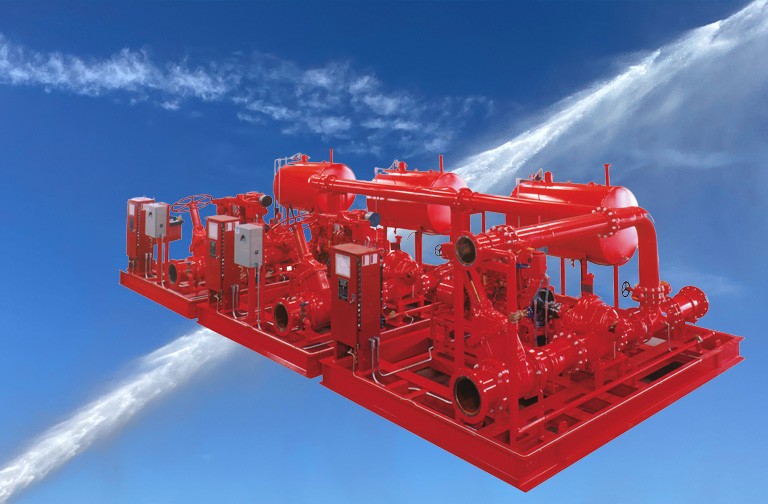
Fire Pump Flow Testing: When It Matters Most!
A fire pump is one of the most important pieces of equipment in a building's fire protection system. But knowing that it starts and runs isn't the same as knowing it will deliver the water pressure and flow required during an emergency.
That's where fire pump flow testing comes in.
Regular flow testing provides a way to evaluate how a fire pump actually performs under operating conditions. It helps building owners, property managers, and facility managers understand the condition of their equipment, identify potential problems, and maintain confidence that their fire protection system is ready when needed.
For commercial buildings and facilities, annual fire pump flow testing is also an important part of the inspection and maintenance requirements established by NFPA 25.
What Is Fire Pump Flow Testing?
Fire pump flow testing measures the pump's ability to deliver water at specified flow rates and corresponding pressures.
Unlike a routine operational check, which verifies that a pump starts and runs, a flow test evaluates its performance while water is being discharged through a test connection or approved test arrangement.
Technicians measure pump suction pressure, discharge pressure, and water flow at specified operating points. These readings help establish whether the pump is performing in line with its rated capacity and expected performance characteristics.
The results provide a valuable snapshot of the pump's operating condition and can help identify changes that might otherwise go unnoticed.
Contact Fleet Pump & Service to schedule your fire pump flow test.
Why Is Annual Flow Testing Important?
Fire pumps may operate infrequently, but they must be ready to perform when called upon. Over time, mechanical wear, deteriorating components, electrical problems, and changes in water supply conditions can affect performance.
A pump might appear to be operating normally while still experiencing a reduction in its ability to deliver the required water flow and pressure.
Routine flow testing helps:
-
Verify pump performance. Determine how the pump performs at specified flow conditions and compare results with its rated and historical performance.
-
Identify developing problems. Detect potential mechanical or operational issues before they become more serious.
-
Monitor changes over time. Compare current readings with previous test results to identify changes in pump performance.
-
Support compliance. Maintain records of required testing and help meet applicable NFPA 25 and local inspection requirements.
-
Improve readiness. Give building owners and facility managers greater confidence in the condition of their fire protection equipment.
Ultimately, flow testing provides information that a simple start-up check cannot.
What Happens During a Fire Pump Flow Test?
A professional fire pump flow test involves more than simply running the pump and checking a pressure gauge.
The process typically includes:
1. Initial inspection
Technicians examine the pump, motor, controller, piping, valves, and related components for visible problems or conditions that could affect testing.
2. Operating checks
The pump is started and its basic operating characteristics are evaluated. Suction and discharge pressures are recorded, along with other relevant operating information.
3. Measuring water flow
Water is discharged through an approved testing arrangement at specified flow conditions. Technicians measure flow and corresponding pressures to evaluate pump performance.
4. Performance evaluation
Test readings are compared with the pump's rated performance and previous test results, where available. This helps identify any significant changes or conditions requiring attention.
5. Documentation and recommendations
Results are documented, providing a record of the pump's performance and identifying any recommended follow-up, maintenance, or repairs.
Flow Testing Is Only One Part of a Complete Maintenance Program
While annual flow testing is essential, it should be part of a broader program of routine inspection, operational testing, and preventive maintenance.
Other important activities include:
-
Regular visual inspections of pumps, piping, valves, and related equipment.
-
Routine no-flow, or churn, testing to verify pump starting and operation.
-
Inspection of controllers, electrical connections, alarms, and associated components.
-
Monitoring for leaks, corrosion, unusual vibration, and noise.
-
Reviewing test records and addressing recommended maintenance or repairs.
It's important to understand that a churn test and a flow test serve different purposes. A churn test evaluates pump operation under no-flow conditions. A flow test provides a more complete picture of the pump's ability to deliver water at specified operating conditions.
Both contribute to understanding the condition and readiness of a fire protection system.
Is Your Fire Pump Flow Test Due?
For building owners and facility managers, keeping track of fire pump testing requirements can easily become one more item on an already busy maintenance schedule.
But fire protection equipment isn't something you want to overlook or postpone. Regular testing helps identify problems, maintain performance records, and address potential issues before an emergency or inspection brings them to light.
Fleet Pump & Service provides professional fire pump flow testing, inspections, and service for commercial buildings and facilities throughout New York, New Jersey, and Connecticut.
Whether you need an annual flow test, routine inspection, or assistance addressing an equipment issue, Fleet can help you keep your fire protection system operating as intended.
Don't wait until your next inspection to find out how your fire pump performs.
Contact Fleet Pump & Service to schedule your fire pump flow test or discuss your inspection and maintenance requirements.
